How “Forum” Traveled From Public Place to Organized Discussion
See how the meaning of forum shifted from public place to organized discussion, and learn what to check before joining a civic meeting or online forum.

The common mistake is to assume that a forum is simply any conversation. That misses the word’s older meaning as a public place and its current use for an organized setting for exchange. Knowing the shift helps you judge what a civic meeting or online forum actually offers.
Public place
“Forum” entered English through Latin, where it referred to an open public space. The Roman Forum was associated with civic, commercial, religious, and social activity. The word’s original sense was concrete: a shared place where public life took shape.
That history can invite an overly rosy picture. A space described as public was not necessarily open to everyone on equal terms. The word’s civic associations tell us something about the setting’s role, but not that every person could participate freely.
Discussion setting
Over time, “forum” came to refer not only to a place but also to a gathering or setting for discussion. A forum might be a meeting, a panel, or a scheduled occasion for people to consider a subject together. The shared idea is an identifiable setting for exchange, not necessarily a town square or permanent building.
A salon offers a useful contrast. It often suggests a hosted social gathering, while “forum” more readily signals a topic, participants, or an arrangement for exchanging views. The terms can overlap, but they do not promise the same kind of occasion.
Participation rules
Calling an event a forum does not tell you how much influence attendees have. One gathering may invite questions from the audience; another may devote most of its time to prepared remarks. The agenda and participation rules matter more than the name on the notice.
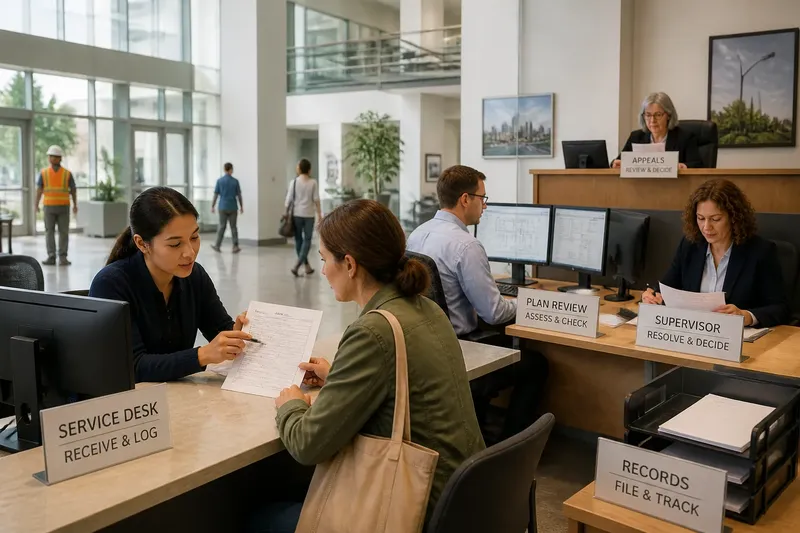
Say a neighborhood group announces a forum about a proposed library renovation. The organizers share the proposal, take residents’ questions, and provide a stated way to submit comments. Those details make the event an organized exchange. If attendees can only listen and there is no channel for response, it functions more like an information session, whatever its title.
Online forums
Online forums carry the idea of a shared discussion setting into a digital space. Participants can post about a topic and read contributions without gathering in the same place or at the same time. Threads and moderation rules help organize what appears and how people respond.
The metaphor of a shared place remains, but the setting is shaped by software as well as by participants. A library meeting and a website discussion area can both be called forums, though one is scheduled and face-to-face while the other may continue across separate visits.
What does forum mean now?
Does a forum have to be public?
No. A forum may be limited to members, invited guests, or a defined community. Check who can attend or post before assuming the word means that anyone is welcome.
Is a forum the same as a debate?
No. A debate usually centers on opposing positions, while a forum can include questions, presentations, and discussion without requiring two sides. The stated purpose and speaking rules clarify the format.
Why do online communities use the word forum?
The term presents a website or platform as a shared place for discussion. It can also signal that posts are organized around topics rather than kept in private messages.
What should I check before attending?
Look for the agenda, the host, the speaking rules, and whether the event is in person or online. If audience members have no way to ask questions or submit comments, expect a presentation rather than an open exchange.
Reading the label
The meaning of “forum” widened from a public place to a gathering for discussion and, later, to a digital space for exchange. Its history helps explain why the word carries a civic tone, but it cannot tell you how a particular event is run.
It is not worth tracing every use of “forum” back to a Roman square when deciding whether to attend. Instead, check who can take part, how contributions are handled, and what organizers say will happen to them. Those details reveal whether the setting offers listening, discussion, or a chance to shape the conversation.
When you see “forum” in a notice or on a website, treat it as a clue, not a promise. The word’s history explains its association with shared exchange; the participation rules show what that means in practice.